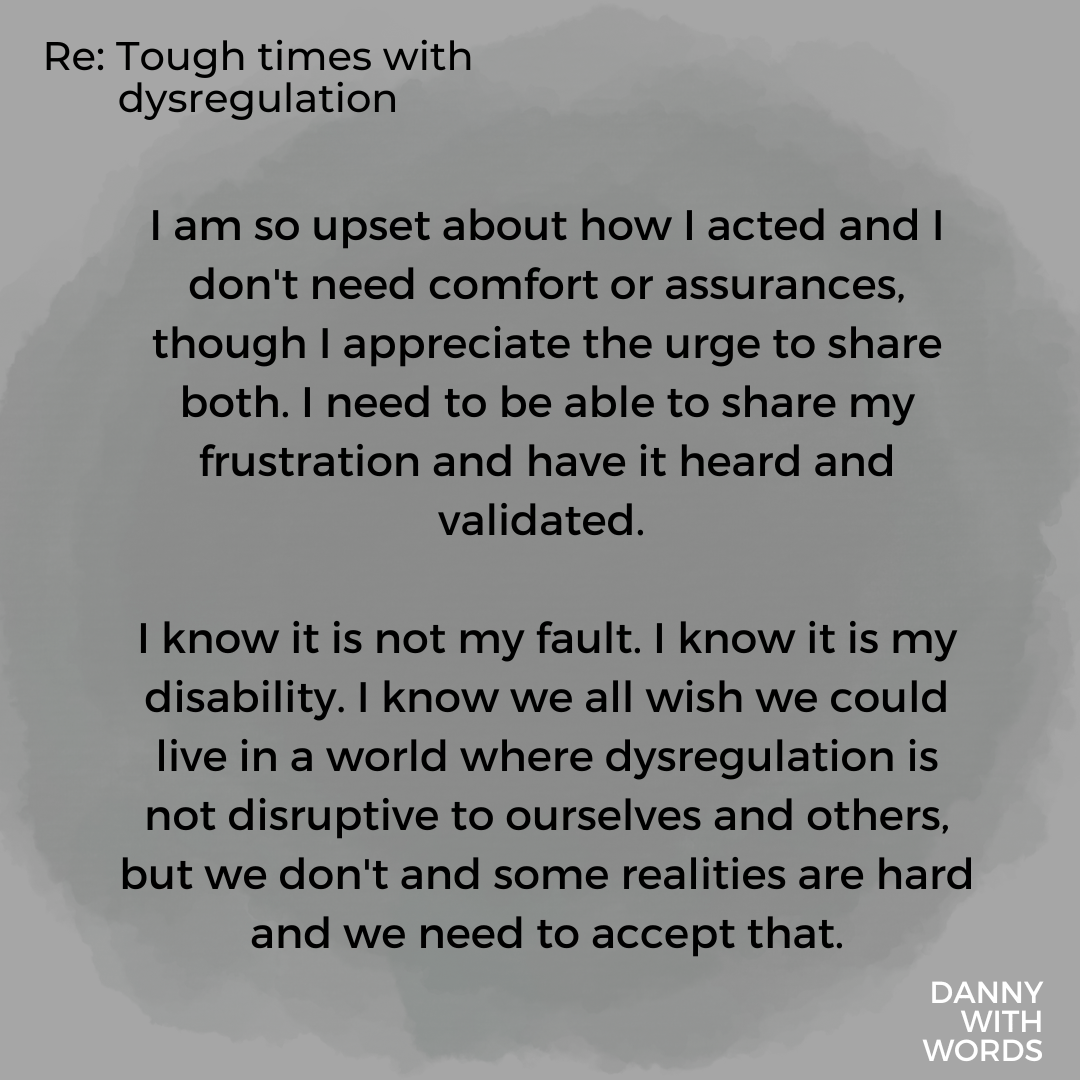
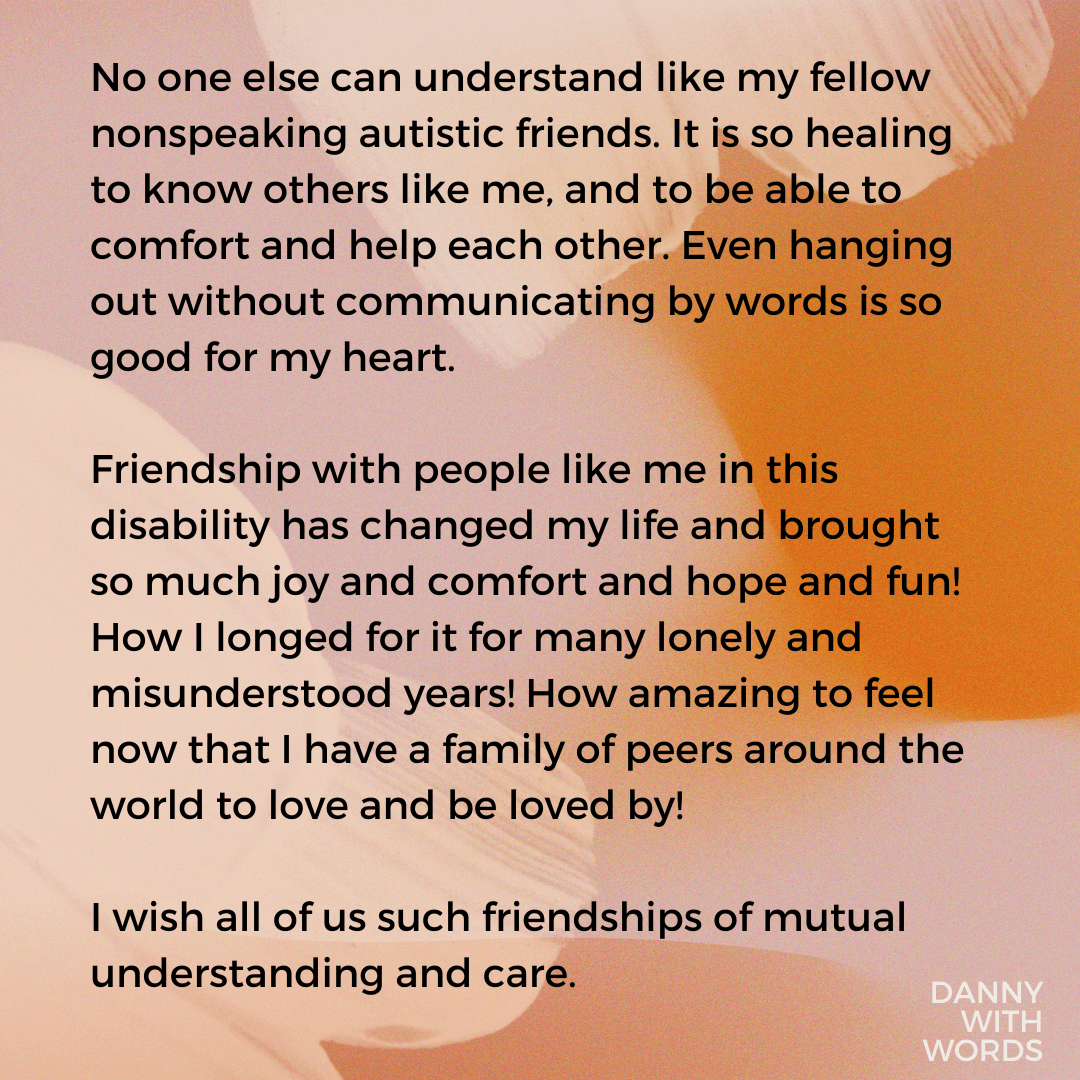
All I Can Say

Dear Friends,

Here are some tough feelings I have been heavy with this week. Thank you to Unrestricted Interest for sharing this in your newsletter, The Listening World (I recommend subscribing for more poems from neurodivergent authors, including some of my friends)! Link: https://thelisteningworld.substack.com/p/all-i-can-say

I am so hoping this resonates with you.

Your Friend,

Danny

Introduction

This poem expresses the deep and unyielding truth: my disability limits me. It is an unflinching message that I and many others reckon with internally, but often feel afraid to share. We are so pressured to be beacons of hope and inspiration, to make others feel better. And for much of my life, I have been told by ignorant educators that I am more limited than I actually am, so I am also reluctant to acknowledge my real limitations.

It sucks. To put it more eloquently would be to sugar coat it. It doesn’t mean that my life is hopeless or worthless or not full of beauty and joy. It is the unvarnished, grainy truth. And of course it gets me down. I am human and I feel disappointment and frustration. I don’t need comfort, but I so need compassion.

Those who know me are aware that I am generally a positive person. I love much about my life. My autism can truly be a wondrous experience, full of light and color and intelligence and mirth and profound feelings. And I hope that I can convey that acceptance of the challenging parts of my life is a part of truly acknowledging my existence in its totality, along with my many joys.

All I Can Say:

Sometimes I have to face that being disabled sucks

All I can say: Sometimes I have to face that being disabled sucks

I love the word absolutely

And its emphatic authority

For excitement or for firm denial

And I love the word wow, wow exclamation point,

And also totally,

And I so love so,

So so so much

I love to spell hmmm…

And truth be told I love to spell profanity

Not the word profanity, but that subset of words deemed impolite

And I feel my heart flow out of my body into the world

When I string together my poems

But it is one of those days when

I feel so absolutely, totally

The so so so harsh reality

That I laboriously, painstakingly, so fucking painstakingly

Have to point out each little letter

And so much of my glorious so glorious

Universe can never be shared.

by Danny Whitty

Sea Lions on Parade

Dear Friends,

We are shifting the focus of The Ocean and Us to be more about adaptive ways of interacting with the ocean! We have new interview episodes coming up starting next week. And I will still be sharing my own ocean journey!

Speaking of, yesterday we snorkeled La Jolla Cove. I was so tired because my body has been struggling lately, and the water temperature had dropped 8 degrees since my last time in it over the weekend, but I still wanted to get out there. And Tara’s GoPro got flooded a couple of weeks ago, so you just have to trust me when I say that it was an amazing snorkel! Because 2 curious sea lions swam and swooped right under us! Then they kept playing in the cove as we watched from a respectful distance.

Then we walked along the coast. It was a gorgeous day, and we watched another group of sea lions hanging out and surfing the waves breaking on the point. It was so magical to watch them cavort in the waves, zooming along then leaping and flipping in the air! And there were mama and pup sea lions on the rocks.

Then we went to Children’s Pool to try to see harbor seals, but there were only a couple of them on the sand and then some on the rocks nearby. Tara taught me more about sea lions and harbor seals, and their conservation and behavior and life history. I loved it!

Your Friend,

Danny

The Ocean & Us Ep9.3: Making Conservation Work for Whales

Dear Friends,

Presenting part 3 (of 3) with Dr. Jo Marie (Jom) Acebes of Balyena.org in the Philippines! She shares about the importance of considering human well-being in conservation (with an example of ray fisheries in the Philippines), her hope for the future (including the importance of youth using social media), and plans for Balyena.org! I so enjoyed chatting with Jom and learning more about her work and even practicing some Tagalog, and I hope you enjoy watching!

See the video and full transcript below!

Your Friend, Danny
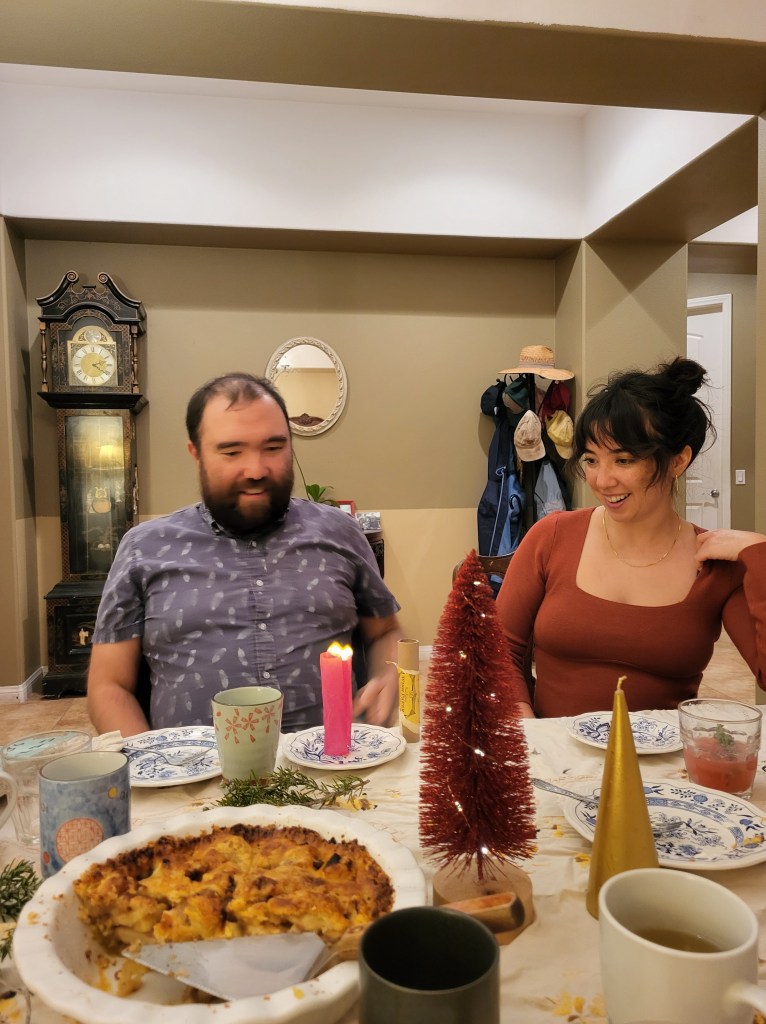
Learn more about Jom’s work at Balyena.org:

https://www.facebook.com/balyena.org.ph

http://balyena.org.ph/main.php

Transcript

Danny: Tara said you also study rays!

Jom: Yes! I studied specifically the local fisheries for rays. I initially focused on historical – like what they did before, when it was still legal to catch them, like in the 60s, 70s. But by same time as the dolphins were protected, manta rays were protected, but they did not include the smaller rays. So I was very interested in the history, how they hunted them, the culture behind it,  and I wanted to prove how important the fishery was to those people who were hunting them.

The laws changed very recently where they protected all of the species of mobula rays. So I was also trying to help the community figure out how much they were catching just to prove to the government that it wasn’t really that big enough to be significant in terms of endangered the population, but we don’t know the numbers. No one was really studying population abundance. Also again trying to prove how important it is to the community in terms of livelihood.

Unfortunately, the ban came in 2016, so no fishing now for any mobula rays, so that community has stopped fishing. So they have not recovered, they still haven’t recovered, and they haven’t really replaced it. There are some who stayed in fisheries, but using gillnets, which is a lot worse for other species, including marine mammals. And there’s still bycatch (accidental catch) of rays.

Tara: See, that’s the problem. Jom and I have talked about this pretty much whenever we meet: conservation is not just “we’re going to protect this animal now.” There’s people’s rights and well-being involved, there’s the larger system, everything’s connected. If you change one thing, you might make a lot of other things worse. So it’s a shame that it had to end up that way, but it’s really interesting that she studies the community just as much as the rays.

D: I am so interested to learn more about this kind of situation!

T: I think it happens a lot

J: A lot of people don’t want to talk about it. That’s what I find.

T: I think there’s this idea that if you’re doing conservation, you must be doing absolute good, because your motives are good, at least where certain animals (usually it’s animals) are involved. But it can still have detrimental impacts

J: On people. And they don’t want to talk about people. They want to talk about just animals

D: Wow, I am so disappointed to hear that!

J: It’s just like that, unfortunately. Even in conferences, they say they want to talk about it, but they don’t really want to talk about it. Yes, they want you to present, but after that, that’s it

T: It’s interesting, when we were at the Barcelona (Society for Marine Mammalogy) conference two years ago, I had the team from Myanmar who you interviewed – Wint Hte and Yin Yin and Aung Naing Soe – they come from a human research background. And even after the first day, Yin Yin was like “They don’t talk very much about people here.” And this was her first international conference, and with everything that’s overwhelming happening, she was able to make that observation very quickly. But I think it’s changing – very slowly – but I think it’s changing, especially with the younger generations of researchers coming in.

D: Are you hopeful for marine conservation in your country?

J: Hmm… that’s a tough question. Okay. I would say I would like to be hopeful…but I am hopeful for the people who are working in conservation and the younger generation. I think that’s the good thing about the generation now – they’re so creative, and especially how they use social media is just amazing.

I don’t know if you follow the one in Dumaguete, the No to 174?

T: No, I haven’t – is that the reclamation?

J: That’s the perfect example, if you have a chance to look it up on Facebook. It’s run by a group of really young people, and they’re amazing how they’re coming up with infographics and how they… they’re so active, and I just wish we had the same group as them up north. It would make so much difference. They’ve already been running this campaign for almost 6 months, they started in July or June. And they just won’t give up, which is great.

And the people who are proposing to build this reclamation, I think they’re about to give up. If it wasn’t for this young group, I think that would’ve just gone through. So the generation now is just, I think, is amazing. So I’m hopeful about that, definitely.

T: I think the Philippines is one of the places where – maybe it’s because it’s one of the places where I’ve spent the most time for my research – I’ve heard of some of the most ridiculous development projects. Why would you build this super intensive development that destroys the natural environment of some of the most beautiful spots – okay, maybe you can build them somewhere where there’s nothing else there, if you’re making a huge resort or amusement park, [you coming back, dude? Yes]  but to build it in places where you already have things already there to attract people… [oh, he’s getting some water or tea] I’m glad that that one’s maybe on the way out…

J: It was so ridiculous. When I first heard that, I think everyone reacted the same way. And like how the politicians and proponents kept insisting, despite – this is like random people, not even marine biologists, random people going in the water and taking photos of the reef just to prove that there is a reef there and there’s so much life there and there’s fisheries. They [proponents of the development over the reef] kept on saying, there’s nothing there, everything’s dead. It’s just ridiculous when you hear people talk like that, like what is wrong with you? Everyone else is saying that you’re wrong, and they just refuse to admit it.

T: That shows the importance of something like citizen science. If there’s no one to point out any differently, oh, “they’re saying it’s all dead, okay!” – so it’s good to have that other narrative

Hi mister, welcome back. So Danny has really amazing hearing, so he probably heard all of that.

D: Indeed I did!

T: Want to sit down bud? We can finish soon if you’re getting antsy, we’ve had a really nice conversation so far, lots of good material.

D: I am sorry, I am getting restless because I am so excited about these issues and ideas!

J: I hope it doesn’t depress you or anything, because it does to me, that affects me.

T: It’s a hard job. I told you how I feel about people who say “Ocean Optimism!” No! I don’t want to see that hashtag one more time. Because if you’re not an optimist, they think you’re a pessimist, but no, I’m a realist. What do you think of that feeling of despair and how do you balance that?

D: It is so tough but I am so inspired by people like you and the work you do!

J: Thank you. Yes, it’s hard work, but we’re trying. Try to be positive.

T: Our dad used to say, “It’s a tough life, but someone has to do it!”

J: True!

D: How did you start getting interested in marine conservation?

J: It’s a long story! But the short path is: from work. So, I really wanted to be a wildlife veterinarian, but in the Philippines back then there wasn’t a lot of opportunities, so when I was looking for a job, I found out that there was a WWF in the Philippines, so I walked into their office and volunteered (they didn’t have an opening). So that’s where I learned everything about marine conservation, not in books – I didn’t really study marine biology or conservation, I didn’t know anything, I can’t remember knowing anything about conservation even in general before I started working for WWF.

And also I learned about whales and other marine mammals also from work, I just studied on my own and from people like Louella [Dolar] and Bill [Perrin]. So, it’s like, how do you call, serendipity? So it just so happens there was WWF, there was an opportunity to volunteer, there was a project that was available that I could work on as a volunteer, and that’s how I learned about everything.

D: Wow! You are a woman of many skills!

J: Thank you! I don’t know if you can call that skills, but yes, I studied…

T: I think you can call that skills – very highly trained skills.

D: Do you use your vet training?

J: Another very good question. I don’t use it as much as I want to, but I do get to do it more when I deal with strandings.

T: And she takes care of the different animals, the cats and dogs that hang around her field sites.

J: That’s my only actual veterinary practice, like my own pets

T: I called you once from Myanmar – we had a really sad incident with a dog – I was like “Jom, what do I do?” so we all need someone like Jom around everywhere, even for cases like that apart from marine conservation.

D: Totally! And my last question: how are you going to move forward with Balyena.org?

J: Yes, that’s a big question. For the past 2 years, especially because of the pandemic, so right now everything is suspended except for our fundraising. So we’re still working on our fundraising. The newest plan now is just – aside from, we do have 2 proposals that we’re waiting for results, we hope to hear this month before Christmas hopefully. So if we get that, then it’s good news for the humpback work and the blue whale work. If we don’t, we still plan to continue the monitoring, but we do it over a shorter period. We do have some savings. It’s unfortunately that way, but it’s really dependent on funding. So it’s a big question mark for 2022 what we’re going to do, because it’s seasonal, most of our work.

We are trying to get new ideas. The newest one is we’re trying to get influencers – local – to promote Balyena.org and our fundraising work and hopefully that will give more attention to the work that we’re doing and hopefully get us some funding.

D: Wow! I am wishing you great fundraising success, and I am so hoping I can visit the whales one day!

T: Me too!

J: It would be great. You would enjoy it I think, on the islands, seeing the whales…

T: We went to see the gray whales in Mexico last year – he loved it. Every time he saw them, “whale!”, “whale!”, “whale!”

J: You would love humpback breeding grounds!

D: Let’s plan on it!

T: Sounds good to me!

J: It’s the season!

T: Now?

J: Yes, it’s started. You just have to hope the borders are open.

T: Yeah, maybe next year!

D: So, can I say “maraming salamat” (thank you) and “ingat ka lagi” (take care always)!

T: Danny, how do you know that?

J: Wow! I’m impressed. Walang anuman! (You’re welcome) And… salamat din! (Thank yoo, too!)

D: Yay!

T: Alright, so are we done?

D: Yes!

T: Okay.

All: Bye!

Snorkel Log: Sharks and Rays and Guitarfish!

Dear Friends,

I am so loving my weekly snorkel outings! I am so lucky to live somewhere with such incredible marine life. I am also lucky to have the support to get out and swim with it!

Here is a clip from this week’s outing. So many sharks and rays and guitarfish! It was so magical.

Your Friend,

Danny

The Ocean & Us Ep9.2: Making Conservation Work for Whales, cont’d

Dear Friends,

Presenting part 2 (of 3) from our fascinating chat with Dr. Jo Marie (Jom) Acebes of Balyena.org in the Philippines! She shares about the conservation status of some marine mammals in the Philippines, and the challenges of trying to reduce the threats to those animals.

I so enjoyed chatting with Jom and learning more about her work, and I hope you enjoy watching!

See the full transcript below.

Your Friend,

Danny

Learn more about Jom’s work at Balyena.org:

https://www.facebook.com/balyena.org.ph

http://balyena.org.ph/main.php

Video

Transcript

D: So let’s talk about conservation of these whales. How are they doing?

J: So, humpback whales, they used to be considered Endangered worldwide. But then I believe in the last 10 years, they were lowered down to, first, Vulnerable (meaning not too much in danger) and then to Least Concern.

But the distinct population in the Philippines together with 4 other distinct populations in the North Pacific – based on the last estimate of how many they are, it’s been found that there are only about 1000 of them. And because they are genetically distinct and because they are found in the Philippines and Japan where there are still threats to them, they’ve been considered by the US through the Endangered Species Act to be Endangered. So they listed that distinct population as one of the endangered populations.

In the Philippines, they are also considered as Endangered.

So the threats: they have been hunted in the past, and this specific population has not recovered. And then trash, marine pollution, is one of the biggest threats right now, especially in, unfortunately, in the Philippines and in Japan.

In Japan, slightly different, they have threats in terms of shipping and whale watching. For us, not really, because it is fairly remote where they are found. But in the Philippines the most recent threat is offshore mining. So that whole area, the Babuyan Marine Corridor, is being threatened by the impacts of offshore mining. Not just on the whales, but more importantly on the fish and coastal areas and a lot of people depend on fisheries in those areas.

D: Wow, those are big issues and I am sure that they are difficult resolve.

J: They are. Honestly, there’s very little you can do on our level, because it’s governments that decide. Like offshore mining for example is very political. In the Philippines, especially, unfortunately, mining has always been a big issue, but because it’s supported by the government, it’s hard to oppose it because you’re seen as an activist, and it’s never good. In the Philippines, that’s quite dangerous.

T: It’s one of the most dangerous countries to be an environmental activist, sadly.

J: Actually, right now, if I wasn’t leaving, I was asked to attend a “consultation” because the company that is mining in that area wants to expand to increase their extraction. So I don’t know what’s going to happen.

D: Oh my goodness! Be careful!

J: Thank you. Yeah, I wanted to go, but I couldn’t, and I think they also time it that they know it’s still difficult to travel around the Philippines, because it’s far – I live far from that area, and they were doing the consultations on site

T: I mean, that’s a common issue with consultations, even conservation groups holding consultations, too. You can say you have a consultation, but it’s importat: who can come?

J: Yeah, the people who are supposed to be consulted are not there!

D: Wow, so how can you support conservation in your work safely?

J: With difficulty. What is he saying?

T: Oh, he’s just playing with the board. He likes to deconstruct the words he just spelled, and he’ll tap them in different orders.

J: Oh! With difficulty. We try, especially if it’s a big issue like this, we do try to get involved with the meetings when we can, but the safest way is just to do it via social media. We’ve been warned by other friends who’ve worked on these kinds of things much longer – we give very little personal information, obviously, like us individuals. It’s safer to put the organization in front and to work with other organizations. We do try as much as possible – we don’t attack, basically. We don’t say anything that’s too confrontational, especially to government agencies. Because that’s the tricky thing – these companies, for example that offshore mining company, work with our Department of Environment and Natural Resources, and they’re the ones who approve it. So we have to talk to them in a way that they won’t find it like we’re attacking them

T: You have to be diplomatic about it

J: Yeah, giving them the science explanation behind why we think it’s not good to be doing those activities. So we try our best to do it by talking and just giving reason based on science and trying to appeal for more meetings and consultations

D: That is very important work!

J: It’s hard, but yeah. Not easy!

D: So how are marine mammals doing in the Philippines?

J: In general, they’re doing well, because they’ve been protected since the 1990s. So they’re no longer hunted, but – there’s always a but – some species, like the Irrawaddy dolphins, because they’re only found in few very specific areas in the Philippines and they’re found in areas where there’s a lot of fisheries as well, they’re the ones that are still considered Critically Endangered. They get caught not just in active fishing nets, but trash – discarded fishing nets.

Some of the reasons why they are found dead, stranded, we still don’t know the reason why – it could be pollution, who knows. And then in some areas, like where a friend works, they’re planning to build a bridge for example which again is going to be detrimental to their habitat, that will definitely affect them.

But for other species, in general, there is no direct threat. Everything is indirect – either of pollution, there’s a lot of marine pollution in the Philippines, or accidentally being caught in fishing.

D: Tough!

J: Very very hard.

[TO BE CONTINUED – FINAL PART POSTING NEXT WEEK!]

The Ocean & Us Ep9.1: Making Conservation Work for Whales

Dear Friends,

Well, at long last, we have a new episode to share! It has been such a scattered year, and we are still learning how to manage our complex schedules. Tara will say it is her fault, but it is more like she is so overextended! I am just so grateful that she can help me with this and so many other things.

So, I am very happy to introduce this episode featuring Jo Marie Acebes (Jom), a friend and impressive conservation researcher from the Philippines! We will share this interview in three parts. Today is part 1!

I so enjoyed chatting with Jom and learning more about her work, and I hope you enjoy watching! Video and transcript below.

Your Friend,

Danny
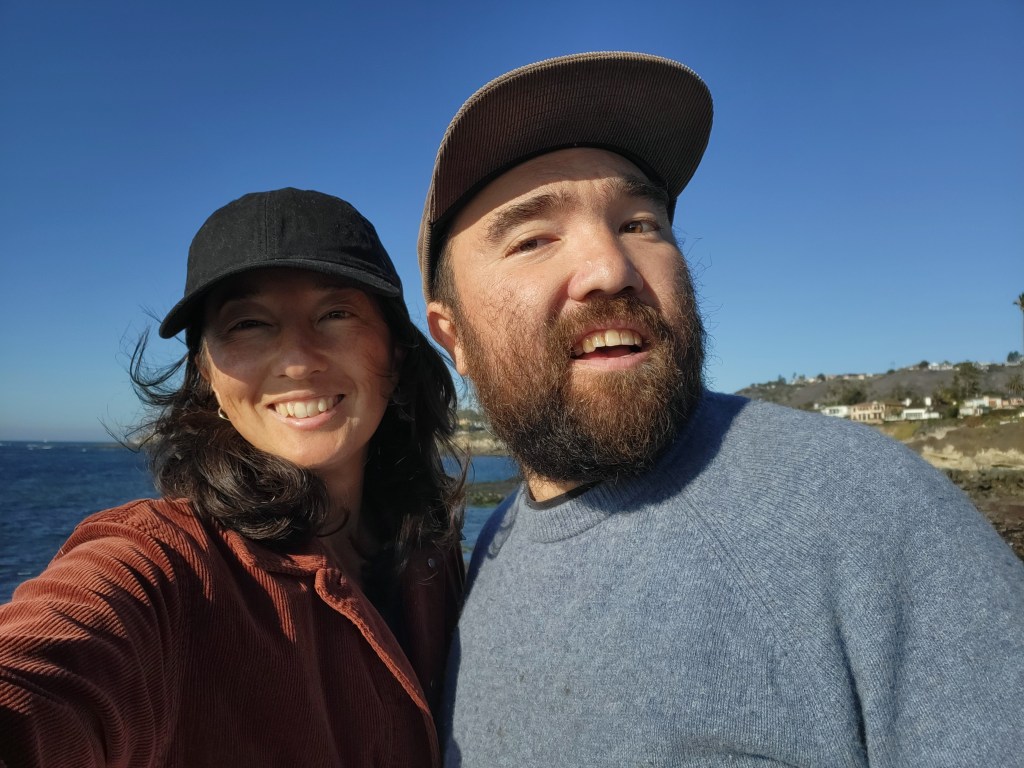
Learn more about Jom’s work at Balyena.org:

https://www.facebook.com/balyena.org.ph

http://balyena.org.ph/main.php

Learn more about the marine animal plushies:

https://www.facebook.com/CSVsewmates/

Transcript

Introduction

Tara: Alright, ready to start?

Danny: So ready!

D: Awesome, exclamation point, done and done!

T: It’s been a while since we’ve, uh, done one of these, huh?

D: Too long!

T: So… for those who haven’t seen any of Danny’s recent videos for other projects, what he’s saying at the end there is “Awesome, exclamation point, done and done!”  It’s just a thing he’ll commonly do at the end of spelling a sentence, especially when it ends in an exclamation point!

So, what do you want to say to everybody?

D: Hi my Ocean Friends!

T: Yes, I echo that. What do you want to say?

D: We missed you!

T: We did miss you.

D: We missed you and we are excited to share new episodes with you!

T: Yes, we are excited to share new episodes with you.

So it has been a while – maybe almost a year – since our last episode because time is a fickle beast. I was really busy with work last year, and Danny has some other projects, and we’re also constantly working on Danny developing skills that he needs to be more autonomous in his communication and his life. All of that takes a lot of time and energy. We are finally at a place where we are able to come up – interview, edit, post – more episodes to share with our The Ocean and Us family.

D: I can’t believe it has been so long!

T: Yeah, I can’t believe it either. I guess we did post your SpellX video later last year, but in terms of real podcast episodes, it’s been close to a year. Yeah, I can’t believe it. But here we are! So, do you want to tell our friends about this episode?

D: You should!

T: I should? Ok. So, we were really excited to have our first in-person interview with my friend – our friend – Jom or Jo Marie Acebes, because she was visiting San Diego for a conference. She’s actually from the Philippines and works in the Philippines. She’s a Senior Museum Research in the Zoology Division of the Natural History Museum of the Philippines, which is a relatively new position, it’s a relatively new museum, so that’s exciting. And she’s the founder and principal investigator of Balyena.org, which is a non-profit working on whale and dolphin [and other large animals!] research and conservation in the Philippines. They have some really great social media posts that are really informative and engaging, so I recommend checking them out – we’ll post some links.

Not only does she have a PhD, but she also has a doctorate in veterinary medicine. And, beyond even those two, her research has also taken an interest in looking at the human side of conservation, and that’s something she and I have spoken about a lot as well.

So we were really happy to have her staying with us while she was in town in December – yes, we are very behind on filming this introduction and editing, it’s already the 2nd half of March. I will say that we have a new webcam now that has higher resolution. The one we used for her interview, unfortunately, was not up to our low light settings, so the resolution is not particularly good. But we hope you can look past that and see the scintillating nature of the conversation we had with her!

How’s that for an introduction?

D: Perfect!

T: Anything else you want to say?

D: We will be posting this in multiple installments!

T: Yeah, so these conversations we have on this podcast are so interesting, they could go on for a long time. We recognize that it’s hard to focus – especially if it’s not a podcast per se but there’s a video involved, it’s hard to focus for very long as an audience member. So even though the conversation itself was about an hour, we’ll be posting it in – we haven’t decided how many installments, maybe 3 installments – more digestible episode parts, so to speak. And so we hope that makes it easier to follow along.

D: I really loved chatting with Jom!

T: Yeah, you did really love chatting with Jom.

D: And learning more about her work!

T: Yeah, even as someone who’s her friend but also her professional colleague, I really enjoyed learning more about her work as well. And you two definitely had a really nice rapport, a really nice flow together.

D: So how about starting the episode now?

T: I think that’s an excellent idea, Danny. We hope you enjoy.

D: Bye!

Interview

T: This is our first in-person interview

J: Oh really?

D: Hi Jom!

J: Hello, good morning!

D: Do you like my hat?

J: Oh yes! Sperm whale! That’s really cool. Where did you get it?

T: Shay gave it for him as a birthday present this year. He loves it. But yeah, you requested to wear it, I suspect for you [Jom]

D: I know it is not a humpback whale, but close enough!

J: Yes, it’s still a whale!

T: I’m glad we can do this. I know scheduling over email, things can get really busy, but now we have you trapped in our house! I’m gonna let you lead this conversation, bud.

D: It is so nice to meet you and have a chance to learn about your work!

J: Thank you. It’s so nice to finally meet you in person!

D: So tell me all about Balyena.org!

J: Thank you, and you got it correct the first time – most people just say Balyena, but Balyena.org, yes, that’s the name.

[Bathroom break]

J: So, Balyena.org, I only got the idea to start it after I quit WWF-Philippines – I used to work with WWF, and at that time I was already working on humpback whales in the Babuyan Islands in the northern Philippines.

I decided, because WWF didn’t want to continue the project anymore, and I thought we put in a lot of work on it and I really wanted to continue it, so I thought why not just do it on my own with some of my friends, former volunteers, former colleagues. So, informally, I thought okay, we’ll start it informally, we’ll find our own funding, write small grants, and continue the work, and eventually we thought it’s better to register it as an organization.

So our first project was the humpback whale project, continuing the work we were doing in the past. Eventually, we thought of expanding it, working on other things like blue whales and then helping with strandings.

T: I actually didn’t know any of that!

D: Wow, I love that you just started it on your own!

J: Thank you. It wasn’t easy, but I wasn’t really just by myself – I had friends to help me. That was very, very important. Without them and the volunteers, it wouldn’t have happened.

T: Yeah, that is important. That’s something I really learned with the team in Myanmar. In the Philippines, you have a lot more people doing work on marine mammals, on marine conservation, but still there’s a lot left to be done, and there’s a lot of room in the region for people with good ideas, if they can get something started, to do something new and needed.

D: Totally! So tell me about those whales!

J: So the humpback whales that visit the Philippines every year, they are part of the Western North Pacific population. So they are the same whales that you find here. But the Philippines, and Okinawa and Ogasuwara in Japan, they are considered breeding grounds for a specific, small, distinct group of this Western North Pacific. So, of the Western North Pacific population, you have small subpopulations, so the ones that breed in the Philippines and Japan are distinct genetically. And they go to feed in Alaska and Russia.

And then every year they do that migration – feeding grounds in the summer, breeding grounds in the winter, so they spend their winters in warmer countries like the Philippines.

T: They’re smart!

J: Yes!

D: So cool! How do you study them?

J: So we do photo-ID – that’s the main method – we take photographs of their flukes, the tail. So the whale, when they dive, they raise their tail or their fluke. A humpback whale, each fluke has a unique pattern of black and white. Also, the serrations are very unique. Let me get a photo here so I can show it.

So we take a photo of their flukes, so each whale will have a unique photograph, so we can identify. So we know which whale is coming back, and where they are, and who they are with.

And then so we take photos of every humpback whale that we see and then so every time we see a humpback whale, we take a photo of the fluke, mark the location with a GPS, and then we match it. We have like a photo album of all the fluke photos of the humpbacks that we know come to the Philippines. We look at them and match to find out if we’ve seen that whale before or not.

And then, at the end of the season, we compare that with other researchers in Japan and also in feeding grounds in Russia and Alaska. So we know if our whale went there and which year or which season they were seen.

And if it’s a female, it’s even more important, because we will be able to tell if it’s had a baby or not, and how many times it’s had a baby.

D: So fascinating!

J: Here is a photo: see, it’s unique, this one is a different whale, it’s named Johnny Moon, and that’s Chandria.

D: I had no idea! Who gets to name them?

J: Normally, as researchers, I like to name them just by the numbers, so very boring. For us, just to remember it’s from the Philippines, we go PH001, and then chronologically.

But the example I showed you is from our Adopt A Whale program, so people can virtually adopt a whale, and they can name them if they don’t have a name yet. So those guys who adopted that decided to name them Johnny Moon and Chandia.

D: Is that through Balyena.org?

J: Yes, that’s part of our fundraising!

D: So creative!

J: Thank you!

D: How do you fund this work besides that?

J: Very good question. I have to write grant proposals every year. Most of our funding comes from international organizations that give out funding. So Adopt a Whale is just a very very recent program that we started. We also sell some merchandise. And the other recent fundraising project is that we’re selling this field guide on whales and dolphins in the Philippines to help fund our research. But yeah, I have to write research grants every year, multiple times a year. So no assurance that we get funding, sadly.

T: And Jom also works for the Natural History Museum in Manila, as well.

J: I have to stay in a regular day job to survive!

D: Tough!

T: Do you still do the felt animals – what are they called?

J: Plushies. Yes, we still do them. I don’t have the Plushies with me because we had to transfer to another volunteer and she’s in charge of trying to sell them. Locally-sewn whale toys or plushies by the women who live in the islands where we work.

T: It’s a cool program. I met Zerlina – she’s from Hong Kong – and she makes these patterns and they do all sorts of different species. I think they have an Irrawaddy dolphin?

J: Yeah, Irrawaddy, narwhal… she’s done every marine mammal, I think, oh maybe not the too unfamiliar ones, like vaquita I’m sure she hasn’t done.

T: That’s a very niche one!

J: But she’s done blue whales, sperm whales, killer whales

T: It’s just cool that women in coastal communities can learn how to do them and people who like those animals can have these nice Plushies while supporting conservation. I like that a lot. It’s a really cool program.

D: So cool and I want to buy some one day!

J: That would be really nice. You can choose – for the Adopt a Whale, we have 16 whales up for adoption. It was hard to choose, because you have to choose the really nice-looking fluke ones, the really interesting ones. Because part of the Adopt A Whale, you get a certificate of adoption, a fluke photo, a plushie, a sticker, and a postcard, and you get updates about your whale quarterly. We tell you if we saw the whale, who it was with, and all those things.

T: So, at marine mammal conferences – I didn’t grow up as “oh, I love dolphins and whales!” – so there’s a lot of cheesy stuff that gets sold. But Balyena.org, they actually have really nice, tasteful things, like their T-shirts have really cool designs. They have good taste.

D: That is so important!

J: Thank you.

[TO BE CONTINUED NEXT WEEK!]

My Birthday Message

Dear Friends,

Wow, I am 37 today! I decided to re-post the poem I wrote for my birthday last year. I am still so just beginning my life with communication, and this is only my third birthday since having Spelling access in my daily life. Each milestone brings joy, pride, and also gratitude, but also regrets over time lost before I could communicate. I am steadily learning to manage and grow through the regrets. I am so glad I can use my words to help other nonspeaking folks and their loved ones.

I will spend the day with my loved ones, and I am so cherishing the moments we can more deeply share now that I can communicate! The years do indeed seem so bright from here.

Your Friend,

Danny

Dear friends of Danny With Words,

Danny suggested that I add my own message to mark his birthday! I am so lucky to have known Danny – my precious little brother! – for 37 years, and I am so grateful that I have been able to support his communication journey over the past couple of years. As his family, we also feel sharp pangs of regret and guilt over time lost before we were able to support communication in his daily life. I use that regret to motivate our drive forward, and to appreciate the life-changing experience of getting to know my brother through his own words. I still can’t quite grasp the marvelous fact that his words now reach hundreds of people regularly!

He is truly my closest ally and soulmate, just the coolest, most wonderful, most thoughtful and caring and funny person ever, and we are already having a fantastic weekend of celebrations! Please join me in wishing Danny a happy, happy birthday!

Your Friend via Danny,

Tara


Years

By Danny Whitty

So all my all my all my

Time in this form

Spent in mostly

Trapped

Purgatory and only now

Am I arrived

And years seem so

Bright from here.

Back to Summer Snorkel Bliss

Dear Friends, 

It is high summer – hot sunny days, invasive crowds, and glorious warm ocean waters! I am back to regular snorkeling after several months’ hiatus. It is easy to get out of the habit, since it is a bit of a drive to our favorite spots, and we are so juggling the many moving parts of my schedule. But lately we have been feeling an urgent need to reconnect with the activities and mindsets that bring joy to our lives, and that make living in expensive San Diego worthwhile!  

So we rearranged our weekly schedule to open up one day for ocean playtime! Having an additional support person helps immensely, too, because Tara has more time to focus on work while Shay drives me to my other sessions and spends time as my art mentor. This change has already markedly improved the energy Tara and I have for diving into our work and our adventures together!  

I was so excited about snorkeling today that I woke up at 6 am and couldn’t go back to bed! This is also part of my renewed efforts to get in better shape, which is an important example of the power of having my own voice in my health and lifestyle practices. I was so happy to get to the beach, see the gorgeous blue water, and confidently wade out and then spend time gently swimming along the coast. I saw leopard sharks, so many bright Garibaldi, a stingray, and a sea turtle! And all under the silky smooth surface! 

It is incredible that all this is just in our county! And I need to get out and appreciate it more, especially while I don’t need a wetsuit! It is such a gift to be able to enjoy this.  

Your salty friend, 

Danny 

We are us

Dear Friends,

I am so glowing from Motormorphosis! Wow! I want to share a poem I wrote about how it felt to be in such an accepting community in person. This was my first time at a large public event centered on nonspeaking autistic folks, and it was such a space of understanding and comfort and peace to not worry about whether my dysregulation or stimming was disruptive. I could feel Tara also noticed it, and it was a new feeling to her too to not worry about how people would react to me! (She is normally only worried about my safety and people who are rude to me – she can turn into a real Mama Bear if provoked on my behalf!)

It was an unexpected highlight to the weekend, and I now hope that more events and spaces will evolve to be so accepting. Thank you to the amazing team at I-ASC and the amazing community of people who attended!

Your Friend,

Danny

We are us

by Danny Whitty

Among you all

There is a peace

Despite our bodies all so struggling

And it is a new feeling to my heart

New since I first realized I was different

My young self destined for a life

Of stares and shame and shushes

And we all the same in that

And we all so kind to each other

And we all united in accepting ourselves.

Catching up & my blue skies

Dear Friends,

Wow, it seems like it has been a long time since I have posted! I was so drained from an emotionally profound and physically tiring trip. It was so amazing, though, and I am so inspired by it.

I want to catch up with you all about so much, but today I want to focus on my ally, CRP, and wonderful older sister Tara. It was her birthday last week, and I was so glad to celebrate with her. She is my blue skies, and my soulmate, and my mentor, and my ocean and travel adventure guide. She has turned her life sideways for me in the past two or so years, and I am actually at a loss for words to describe her commitment to me. I want to share that she is a brilliant and accomplished person in her own right, a beautiful writer, an impressive researcher, an amazing teacher, and a uniquely compassionate person. I am so lucky to have her in my life!

A big next step to support Spellers like me is more programs and residential communities where spelling is supported through aides trained as CRPs and integrated into meaningful activities for growth and well-being. This would allow us to thrive without being so extremely dependent on our loved ones. It is so difficult to feel that I am holding someone as brilliant as my sister back from her own dreams and her own gifts to the world. She never makes me feel guilty for her commitment to me, and I know she finds it so fulfilling, but I know her dreams are not compatible with being my main support person all of the time. And my dreams are not compatible with relying only on my family.

This is a hard truth to face. I am so appreciative beyond words for all of the families supporting their nonspeaking autistic loved ones, and I hope it gets easier for all of us in the not-too-distant future. I am so excited to be involved in two initiatives to build such communities (Teva Community and The Ohana Consortium), and I am hopeful that our options for fruitful and more autonomous lives will keep blossoming!

So, I want to celebrate the amazing woman who has changed my life, and celebrate all like her! I wish I had better words to describe what she means to me, but as she often kindly reminds me, “it doesn’t have to be perfect to be good.” Happy belated birthday, Tara!

Your Friend,

Danny